
Get to the root of your digestive issues with gut-brain therapy techniques that help you self-manage your gut symptoms in just 6-weeks.

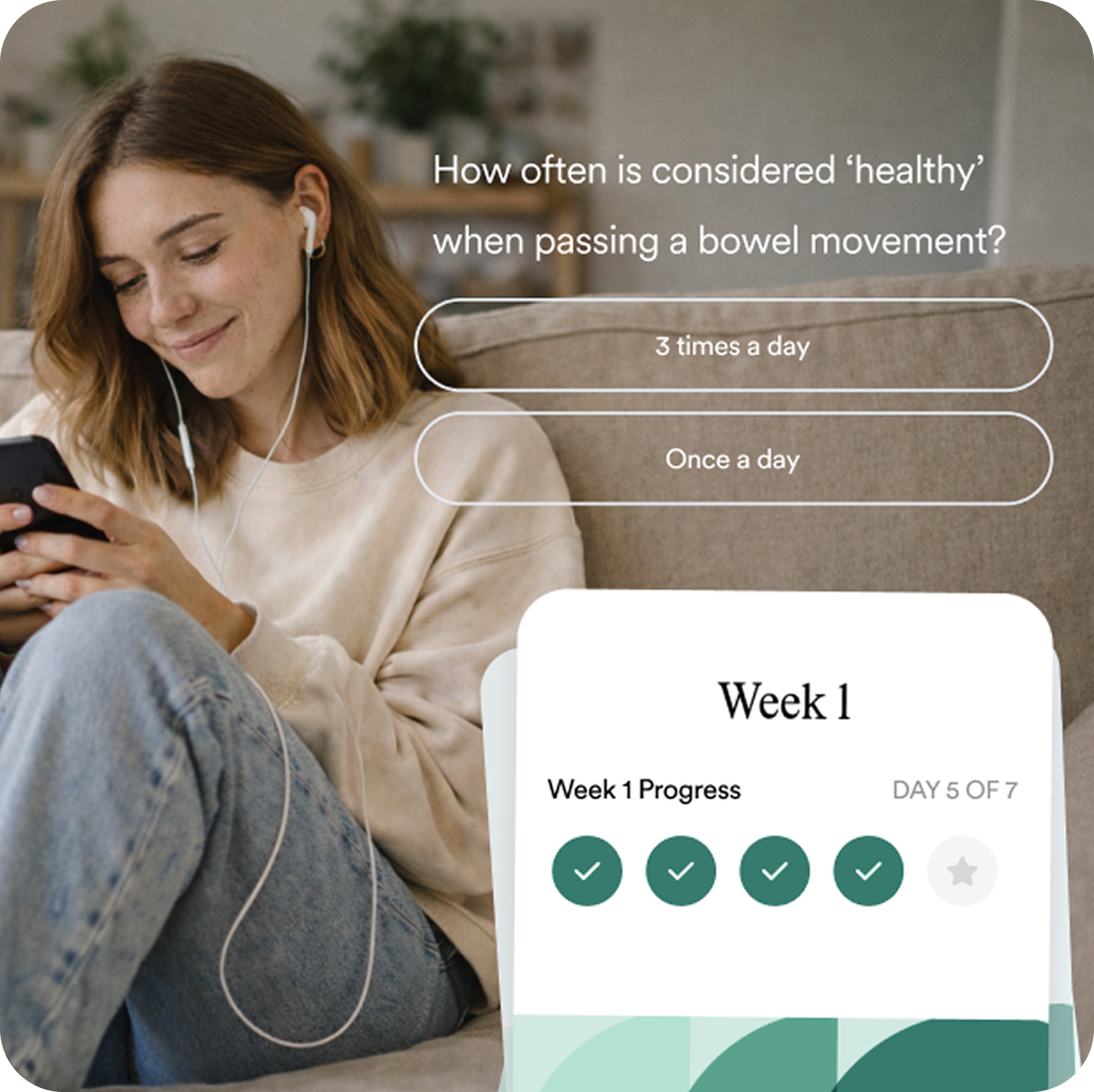


IBS, functional dyspepsia, functional constipation, and functional heartburn are now classified as gut-brain disorders - conditions driven by miscommunication between the gut and brain. The same gut-brain dysfunction also explains why many people with IBD continue to experience pain, constipation, or diarrhea even when their disease is in remission.
When the gut and brain fail to communicate properly, the body can misinterpret normal digestive processes as pain or discomfort. This heightened sensitivity, known as visceral hypersensitivity, can make the gut more reactive and contribute to gastrointestinal symptoms.


Nerva combines evidence-based gut-brain therapy techniques with real human support to help you self-manage symptoms, rebuild confidence, and get back to living fully.

The Nerva program was co-founded by Dr. Simone Peters, who ran a clinical trial with Monash University that found gut-brain therapy therapy worked just as well as the Low FODMAP diet in helping you participants well with and self-manage IBS.


Gut-brain therapy techniques targets the source of the problem: oversensitive nerves in the gut.

Gut-brain therapy techniques teaches you how to address this miscommunication between the gut and brain.

Gut-brain therapy techniques has been shown to help with constipation, diarrhea and mixed IBS.

Studies have shown gut-brain therapy techniques can help you achieve long-lasting IBS management.



Answer questions about you and your gut history to see if Nerva can work for you.

Daily gut-brain sessions, educational content, and goal oriented progress, tailored to your preferences.

Learn skills that can help you teach your brain to ignore false alarms from the gut triggered by food and stress.

Live the life you want, free from the control of digestive diseases.
.png)

Backed by 5+ studies including a randomized controlled trial.

9/10 members see meaningful progress in 4-6 weeks.

Learn skills focused on retraining the gut-brain axis.

Short daily sessions from the comfort of your home.

Algorithms allow platforms to serve highly specific content to niche audiences, ensuring that there is "something for everyone."
While we have more choices, the "watercooler moment"—where everyone watches the same show at the same time—is becoming rarer, replaced by viral social media trends that peak and fade within days. The Power of Representation and Global Media
This creates an immersive ecosystem where fans can "live" within their favorite stories. Franchises like Marvel, Star Wars, and The Last of Us leverage this to maintain engagement year-round, turning casual viewers into dedicated lifelong fans. The Future: AI, VR, and the Metaverse MassageRooms.14.01.07.Lucy.Li.And.Jay.XXX.1080p...
Entertainment Content and Popular Media: The Digital Pulse of Modern Culture
One of the most significant shifts in popular media is the push for . As streaming services expand worldwide, content is no longer Western-centric. Algorithms allow platforms to serve highly specific content
We no longer wait a week for a new episode. We consume entire seasons in a weekend.
The Streaming Revolution and the Death of the "Watercooler Moment" The Future: AI, VR, and the Metaverse Entertainment
Modern entertainment doesn't stop when the credits roll. We are living in the age of the and Transmedia Storytelling . A popular media franchise today often spans across: Feature Films Limited Series Video Games Podcasts and AR Experiences
In the modern era, the lines between our physical lives and our digital experiences have blurred into a single, continuous stream. At the heart of this convergence is , a powerhouse industry that does far more than just "distract" us. It shapes our language, dictates our trends, and provides the cultural glue that connects people across continents.
Shows like Squid Game (South Korea) or Money Heist (Spain) have proven that language is no longer a barrier to becoming a global phenomenon. Entertainment content is increasingly reflecting a multi-faceted world, allowing audiences to see themselves represented in stories that were previously gatekept by traditional studios. Transmedia Storytelling: Worlds Beyond the Screen

"Hi, it's Alex, one of the founders of Nerva alongside Chris and Dr. Simone Peters.
We designed Nerva to help people with gut-brain disorders get back to a happy, normal life, free of flare-up worries. We're so proud of the fact that we've already helped over 300,000 people live better. Yet, we understand Nerva may not work for some people which is why we have a 100% money back guarantee.
If you finish your 6-week program and think Nerva hasn't helped you manage your symptoms, simply email support for a full refund of the Nerva program."
- Alex Naoumidis, Co-Founder and Co-CEO, Mindset Health


Based on studies that helped 3 in 4 people manage their gut symptoms.

15 minutes a day for 6 weeks. Short and relaxing sessions that fit with your schedule.

Discover helpful and calming flare-up exercises, like our deep breathing techniques.

Listen anytime and anywhere (home, office, couch, you name it).

Learn about gut-brain disorders with a range of easy to understand in-app articles.

Say bye to bots. We have real Nerva team members ready to help!
.svg)
.svg)


1) Anderson, Ellen J. BNutSci, MDiet1,2; Peters, Simone L. BSc (Psychophysiology) (Hons), PhD1; Gibson, Peter R. MBBS(Hons), MD1,2; Halmos, Emma P. BNutDiet, PGradDipBSc, PhD1,2. Comparison of Digitally Delivered Gut-Directed Hypnotherapy Program With an Active Control for Irritable Bowel Syndrome. The American Journal of Gastroenterology 120(2):p 440-448, February 2025. | DOI: 10.14309/ajg.0000000000002921 2) Peters, S. L., Yao, C. K., Philpott, H., Yelland, G. W., Muir, J. G., & Gibson, P. R. (2016). Randomised clinical trial: the efficacy of gut-directed hypnotherapy is similar to that of the low FODMAP diet for the treatment of irritable bowel syndrome. Alimentary pharmacology & therapeutics, 44(5), 447–459. https://doi.org/10.1111/apt.13706


