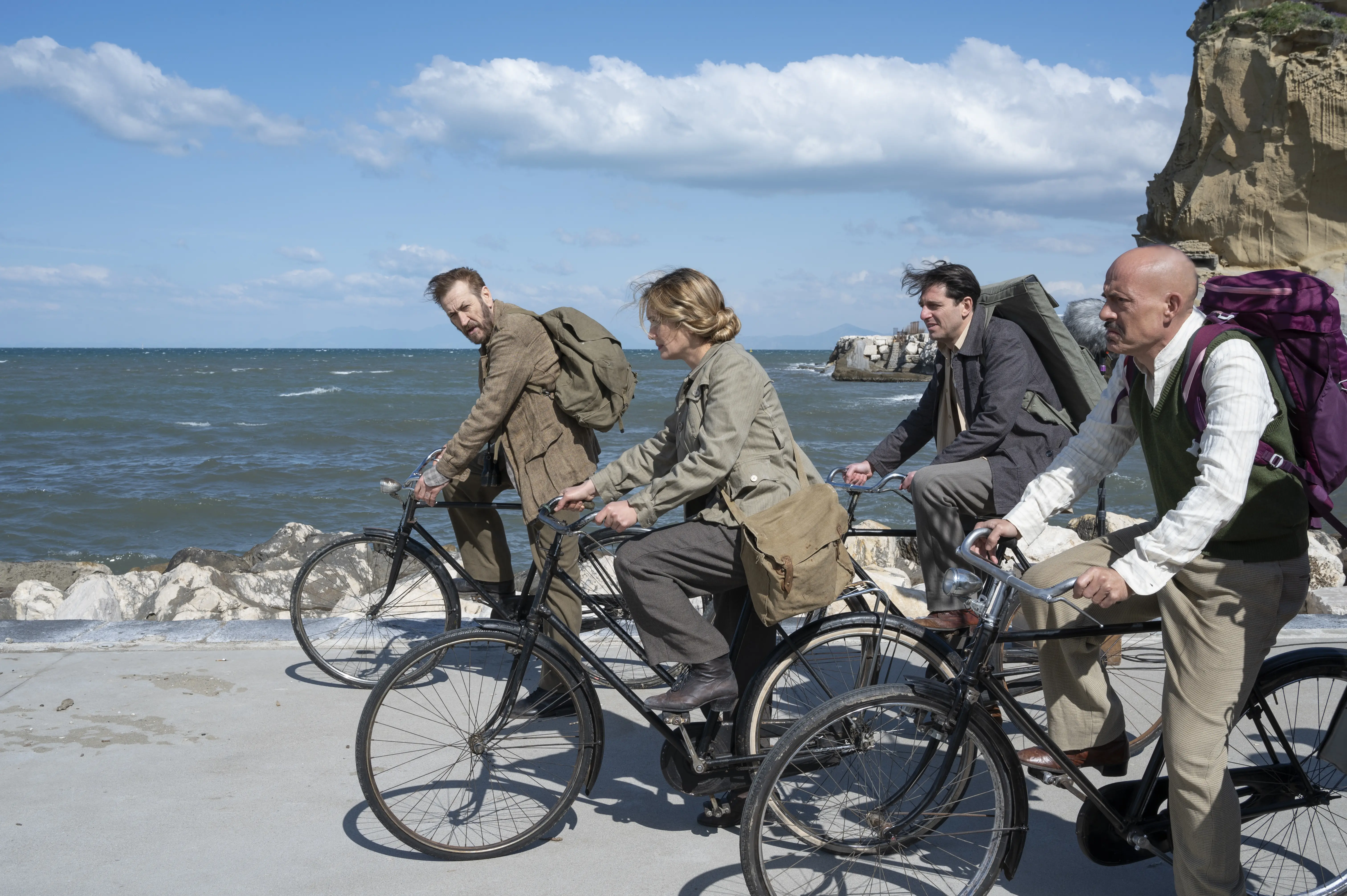
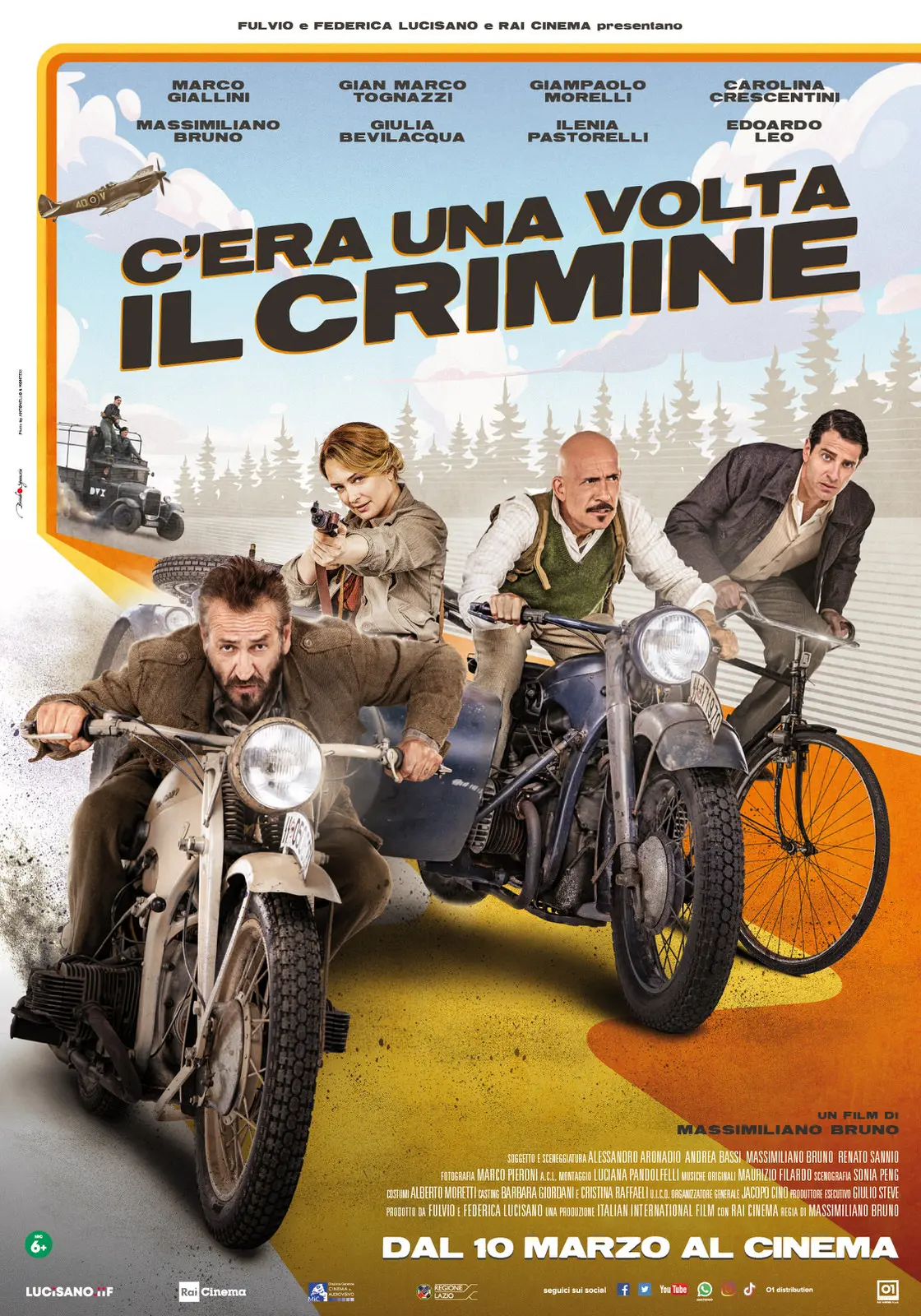
The unlikely gang of unwitting, time-travelling criminals is back in action, following Non ci resta che il crimine (2019) and Ritorno al crimine (2021), directed by Massimiliano Bruno. Their goal in this third film is to return to 1943, to the days preceding 8 September, and steal Leonardo da Vinci’s most famous painting, the Mona Lisa, from the French. In their travels they meet famous characters and stumble into real historical events in an Italy overwhelmed by WWII.
By the end of the fast animated opening sequences, over the film titles, the gang has already stolen the Mona Lisaand is now by the aqueduct of ancient Monterano. Everything seems to be going well, the three prepare to return to the present-day with their haul. The time-travel portal is located in Camogli, however it will not be simple to travel through Italy in the chaotic aftermath of the armistice, amidst Nazis, Fascists and partisan fighters (“they haven’t built the A1 motorway yet!”).
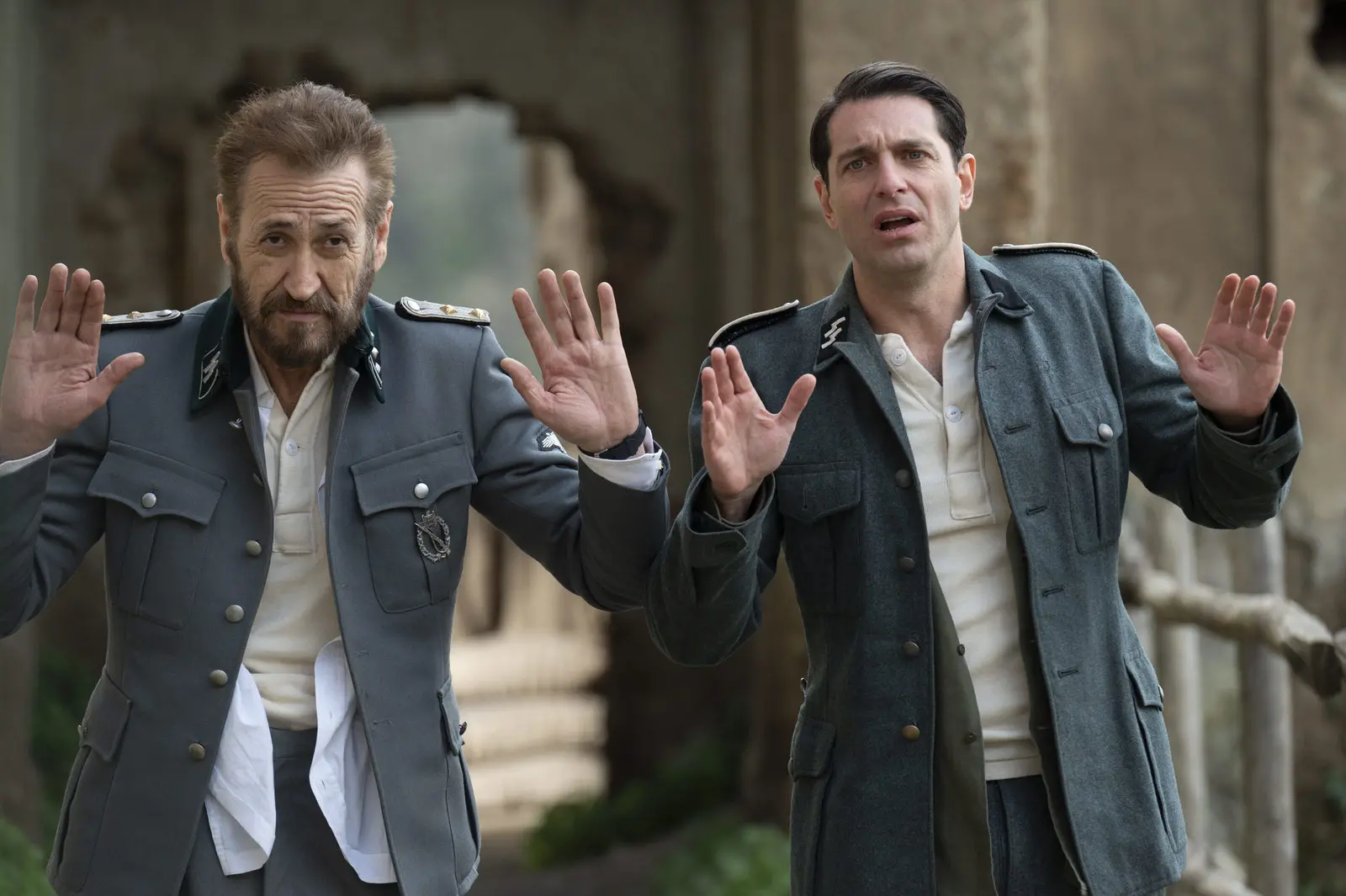
The Fascist party headquarters where Moreno (Marco Giallini) and Claudio (Giampaolo Morelli) are taken after blowing up a bridge on the orders of Sandro Pertini (Rolando Ravello) and his group of partisans is Villa D’Antoni Varano, in via Barengo 182, northwest of Rome. King Victor Emanuel is expected to arrive at the Castle of Crecchio, actually Brancaccio Castle in San Gregorio da Sassola, to the east of Rome. suelen shemale gallery
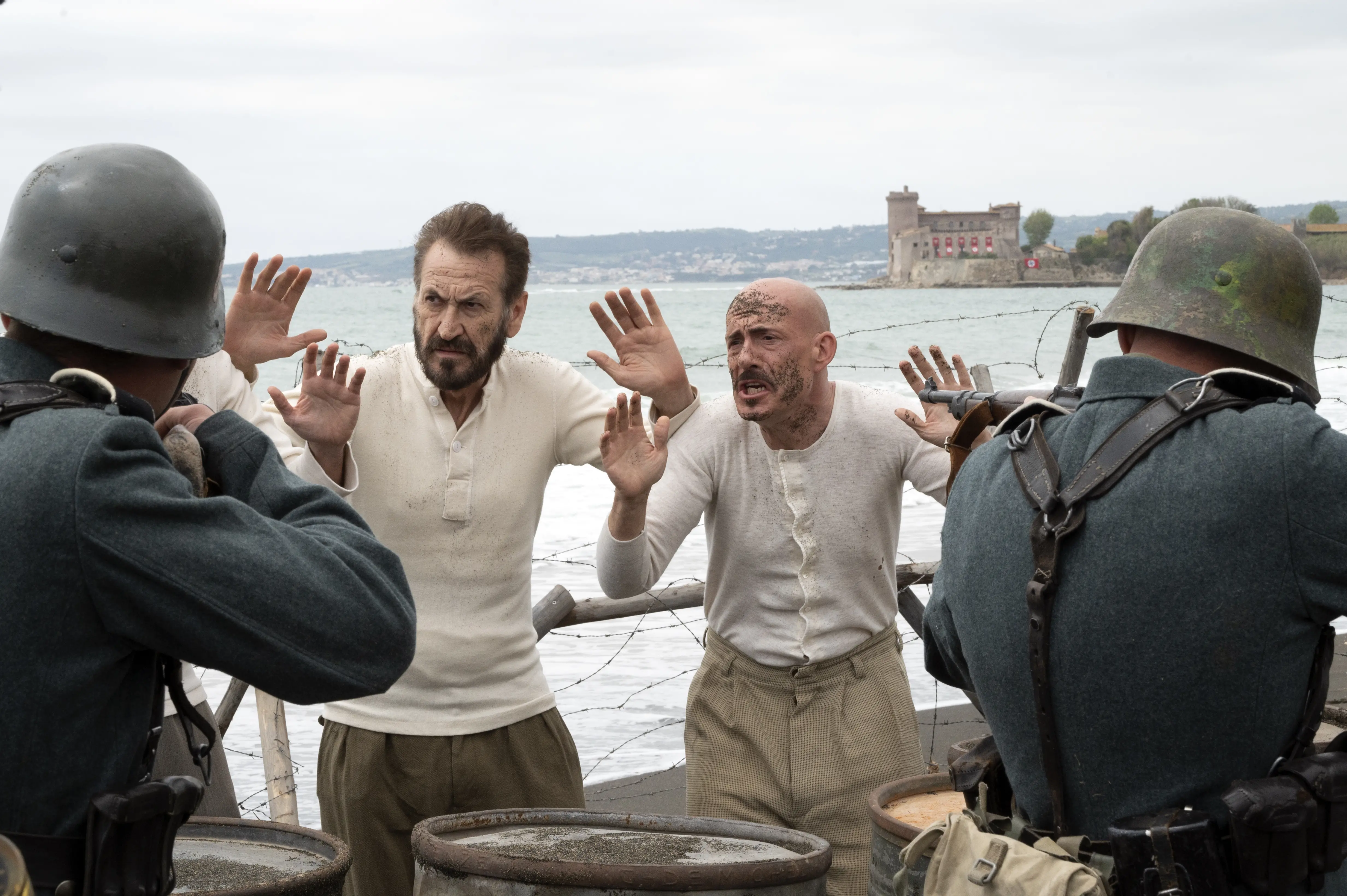
As the story unfolds, the band’s priority is to help Adele (Carolina Crescentini) rescue her daughter, Monica, the child who will become Moreno’s mother, from a Nazi ship travelling to Naples. On a beach in Bacoli, near the Marina Grande dock, Claudio improvises a conversation in pure Neapolitan dialect to find out if the ship has docked: the headquarters of the Nazi army in Naples is actually the Castle of Santa Severa, in the Macchiatonda Nature Reserve, on the Lazio coastline north of Rome. On the beach there the Germans organize a firing squad and an unlikely battle between Nazis and the Magliana Gang breaks out.
The production also shot in Cerreto di Spoleto and on part of the disused Spoleto-Norcia trainline in Umbria. The modern LGBTQ+ rights movement didn’t start in
The unlikely gang of unwitting, time-travelling criminals is back in action, following Non ci resta che il crimine (2019) and Ritorno al crimine (2021), directed by Massimiliano Bruno. Their goal in this third film is to return to 1943, to the days preceding 8 September, and steal Leonardo da Vinci’s most famous painting, the Mona Lisa, from the French. In their travels they meet famous characters and stumble into real historical events in an Italy overwhelmed by WWII.
By the end of the fast animated opening sequences, over the film titles, the gang has already stolen the Mona Lisaand is now by the aqueduct of ancient Monterano. Everything seems to be going well, the three prepare to return to the present-day with their haul. The time-travel portal is located in Camogli, however it will not be simple to travel through Italy in the chaotic aftermath of the armistice, amidst Nazis, Fascists and partisan fighters (“they haven’t built the A1 motorway yet!”). To understand this relationship, we have to look
The Fascist party headquarters where Moreno (Marco Giallini) and Claudio (Giampaolo Morelli) are taken after blowing up a bridge on the orders of Sandro Pertini (Rolando Ravello) and his group of partisans is Villa D’Antoni Varano, in via Barengo 182, northwest of Rome. King Victor Emanuel is expected to arrive at the Castle of Crecchio, actually Brancaccio Castle in San Gregorio da Sassola, to the east of Rome.
As the story unfolds, the band’s priority is to help Adele (Carolina Crescentini) rescue her daughter, Monica, the child who will become Moreno’s mother, from a Nazi ship travelling to Naples. On a beach in Bacoli, near the Marina Grande dock, Claudio improvises a conversation in pure Neapolitan dialect to find out if the ship has docked: the headquarters of the Nazi army in Naples is actually the Castle of Santa Severa, in the Macchiatonda Nature Reserve, on the Lazio coastline north of Rome. On the beach there the Germans organize a firing squad and an unlikely battle between Nazis and the Magliana Gang breaks out.
The production also shot in Cerreto di Spoleto and on part of the disused Spoleto-Norcia trainline in Umbria.
Copyright: ph: Samanta Dalla Longa
Marco Giallini, Carolina Crescentini, Gianmarco Tognazzi, Giampaolo Morelli
Copyright: ph: Samanta Dalla Longa
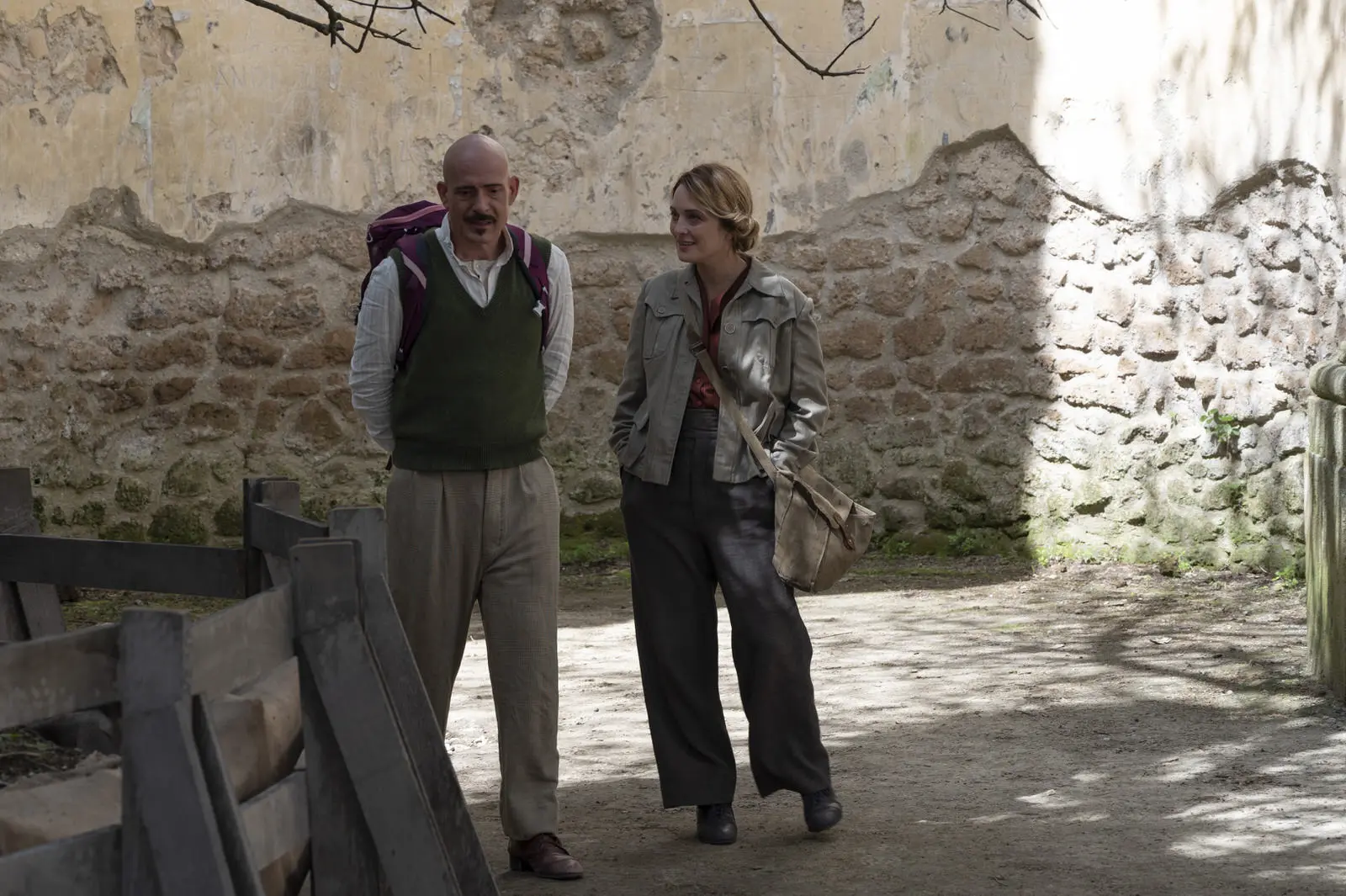
Gianmarco Tognazzi, Carolina Crescentini
Copyright: ph: Samanta Dalla Longa
Marco Giallini, Giampaolo Morelli
Copyright: ph: Samanta Dalla Longa
Marco Giallini, Gianmarco Tognazzi
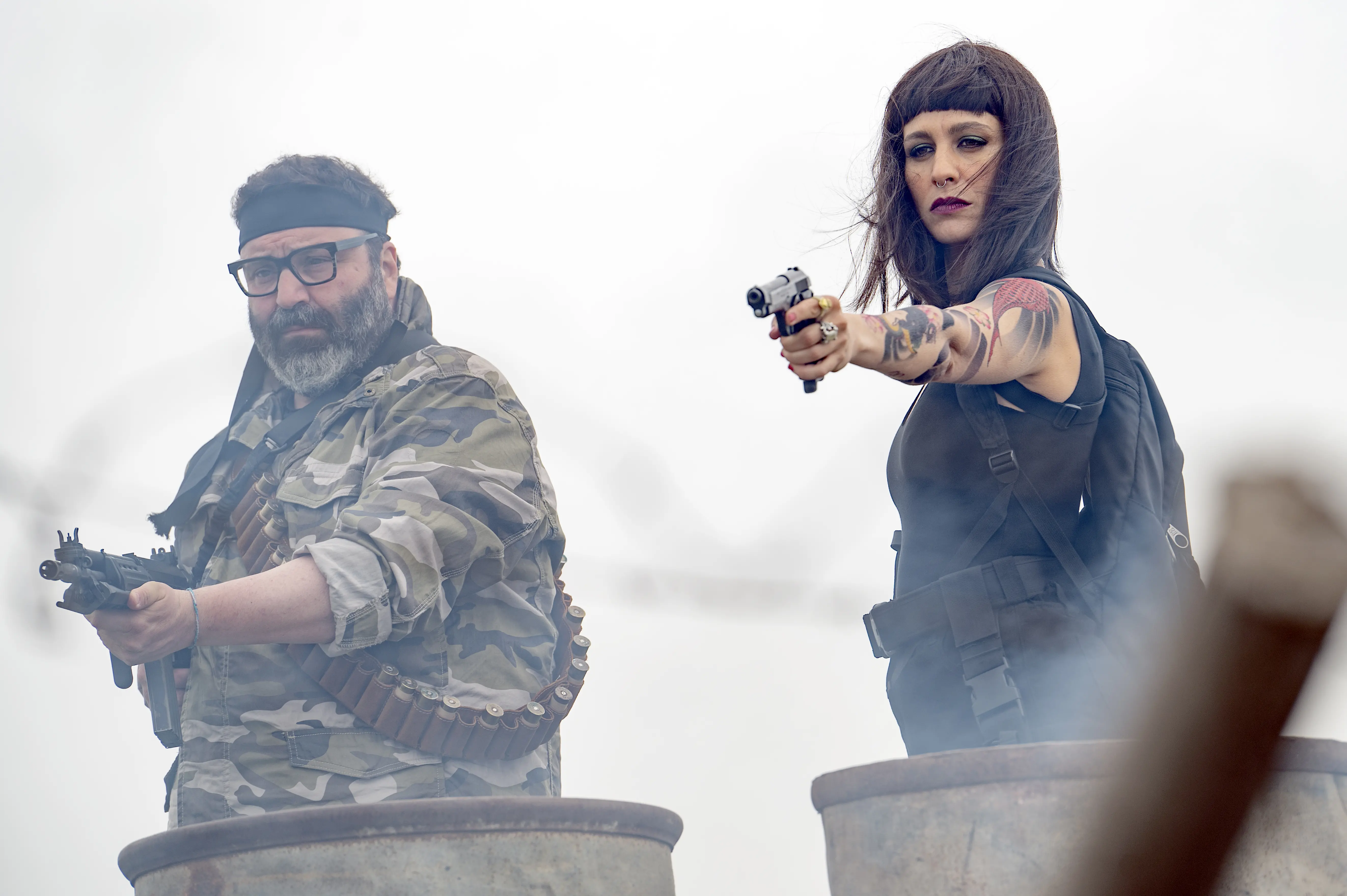
Copyright: ph: Samanta Dalla Longa
Massimiliano Bruno, Giulia Bevilacqua

Copyright: Sky
Massimiliano Bruno
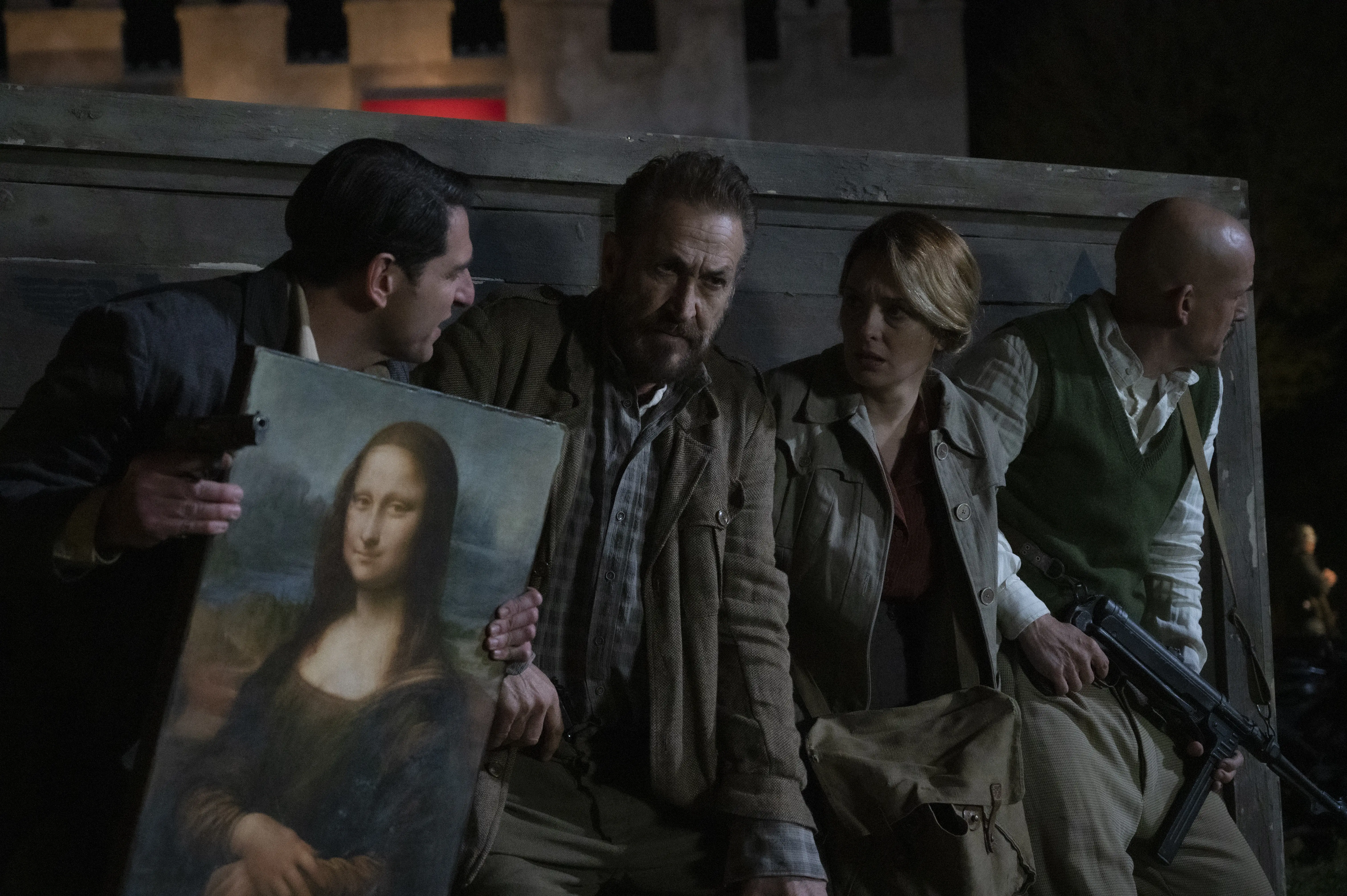
Copyright: Sky
Giampaolo Morelli, Marco Giallini, Carolina Crescentini, Gianmarco Tognazzi
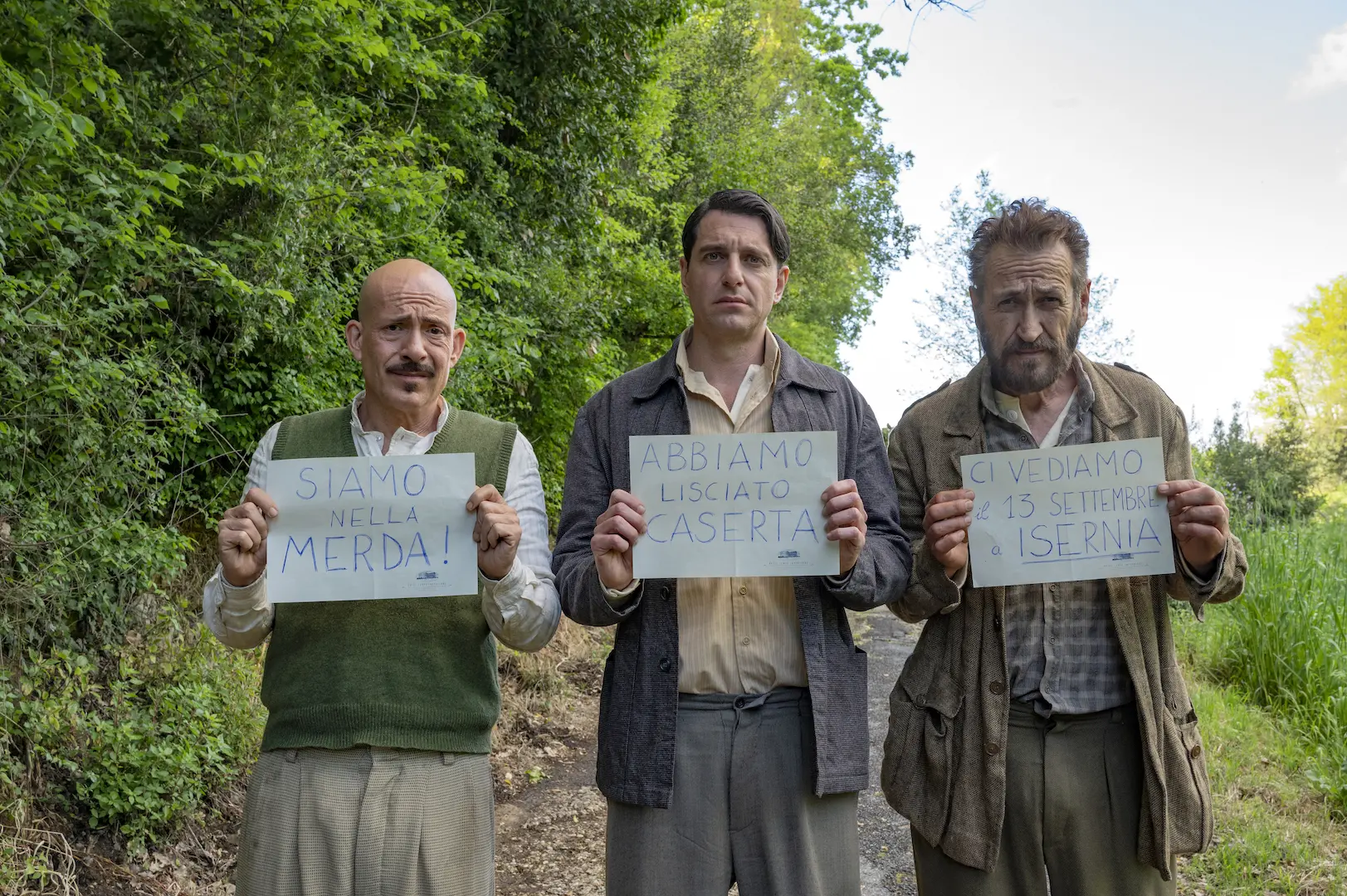
Copyright: ph: Samanta Dalla Longa
Gianmarco Tognazzi, Giampaolo Morelli, Marco Giallini
The push for gender-neutral pronouns (they/them/ze) and inclusive language originated within trans and non-binary circles and has since permeated mainstream corporate and social environments.
The transgender community and the broader LGBTQ+ culture are bound by a shared history of resistance, a common fight for civil rights, and a vibrant tapestry of shared spaces. While "LGBTQ+" serves as an umbrella term, the "T" represents a distinct journey of gender identity that has both anchored and revolutionized the movement.
The modern LGBTQ+ rights movement didn’t start in boardrooms; it started in the streets, led largely by transgender women of color. Figures like and Sylvia Rivera were at the forefront of the 1969 Stonewall Uprising. At the time, the distinction between "gay" and "transgender" was less rigid in the public eye—everyone who defied traditional gender and sexual norms was grouped together.
To understand this relationship, we have to look at how these communities intersect, the unique challenges trans individuals face, and the cultural shifts they continue to lead. The Historical Anchor: A Shared Fight
Originating in the Black and Latine trans communities of New York City, ballroom culture gave us "voguing," "slay," and the concept of "chosen families."
These disparities sometimes lead to friction within the culture, as trans activists call for the "LGB" portions of the community to use their relative social capital to protect the most vulnerable members of the "T." The Future of the Community
The transgender community is currently leading the most significant cultural conversation of the 21st century: the decoupling of biology from destiny. As Gen Z and Gen Alpha embrace gender fluidity at record rates, the "transgender experience" is becoming less of a niche subculture and more of a blueprint for how everyone—queer or straight—can live more authentically.
From the Wachowskis in film to SOPHIE in music, trans creators have pushed the boundaries of "queer art," moving away from tragic tropes toward "trans joy" and futurism. Challenges and Divergent Paths
Despite the "pride" of the umbrella, the transgender community often faces steeper hurdles than their cisgender (LGB) peers.
The push for gender-neutral pronouns (they/them/ze) and inclusive language originated within trans and non-binary circles and has since permeated mainstream corporate and social environments.
The transgender community and the broader LGBTQ+ culture are bound by a shared history of resistance, a common fight for civil rights, and a vibrant tapestry of shared spaces. While "LGBTQ+" serves as an umbrella term, the "T" represents a distinct journey of gender identity that has both anchored and revolutionized the movement.
The modern LGBTQ+ rights movement didn’t start in boardrooms; it started in the streets, led largely by transgender women of color. Figures like and Sylvia Rivera were at the forefront of the 1969 Stonewall Uprising. At the time, the distinction between "gay" and "transgender" was less rigid in the public eye—everyone who defied traditional gender and sexual norms was grouped together.
To understand this relationship, we have to look at how these communities intersect, the unique challenges trans individuals face, and the cultural shifts they continue to lead. The Historical Anchor: A Shared Fight
Originating in the Black and Latine trans communities of New York City, ballroom culture gave us "voguing," "slay," and the concept of "chosen families."
These disparities sometimes lead to friction within the culture, as trans activists call for the "LGB" portions of the community to use their relative social capital to protect the most vulnerable members of the "T." The Future of the Community
The transgender community is currently leading the most significant cultural conversation of the 21st century: the decoupling of biology from destiny. As Gen Z and Gen Alpha embrace gender fluidity at record rates, the "transgender experience" is becoming less of a niche subculture and more of a blueprint for how everyone—queer or straight—can live more authentically.
From the Wachowskis in film to SOPHIE in music, trans creators have pushed the boundaries of "queer art," moving away from tragic tropes toward "trans joy" and futurism. Challenges and Divergent Paths
Despite the "pride" of the umbrella, the transgender community often faces steeper hurdles than their cisgender (LGB) peers.